






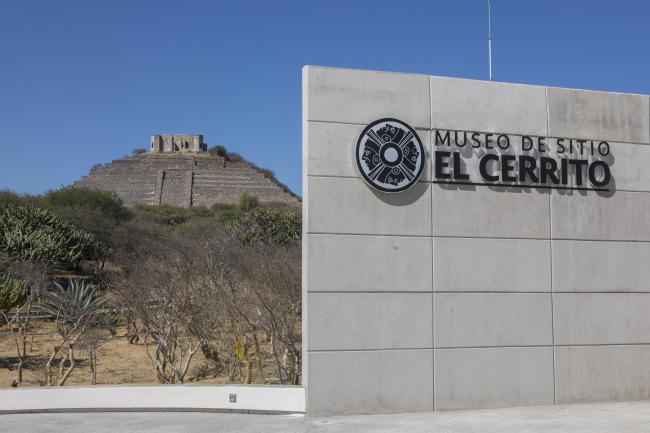

Museo de Sitio El Cerrito

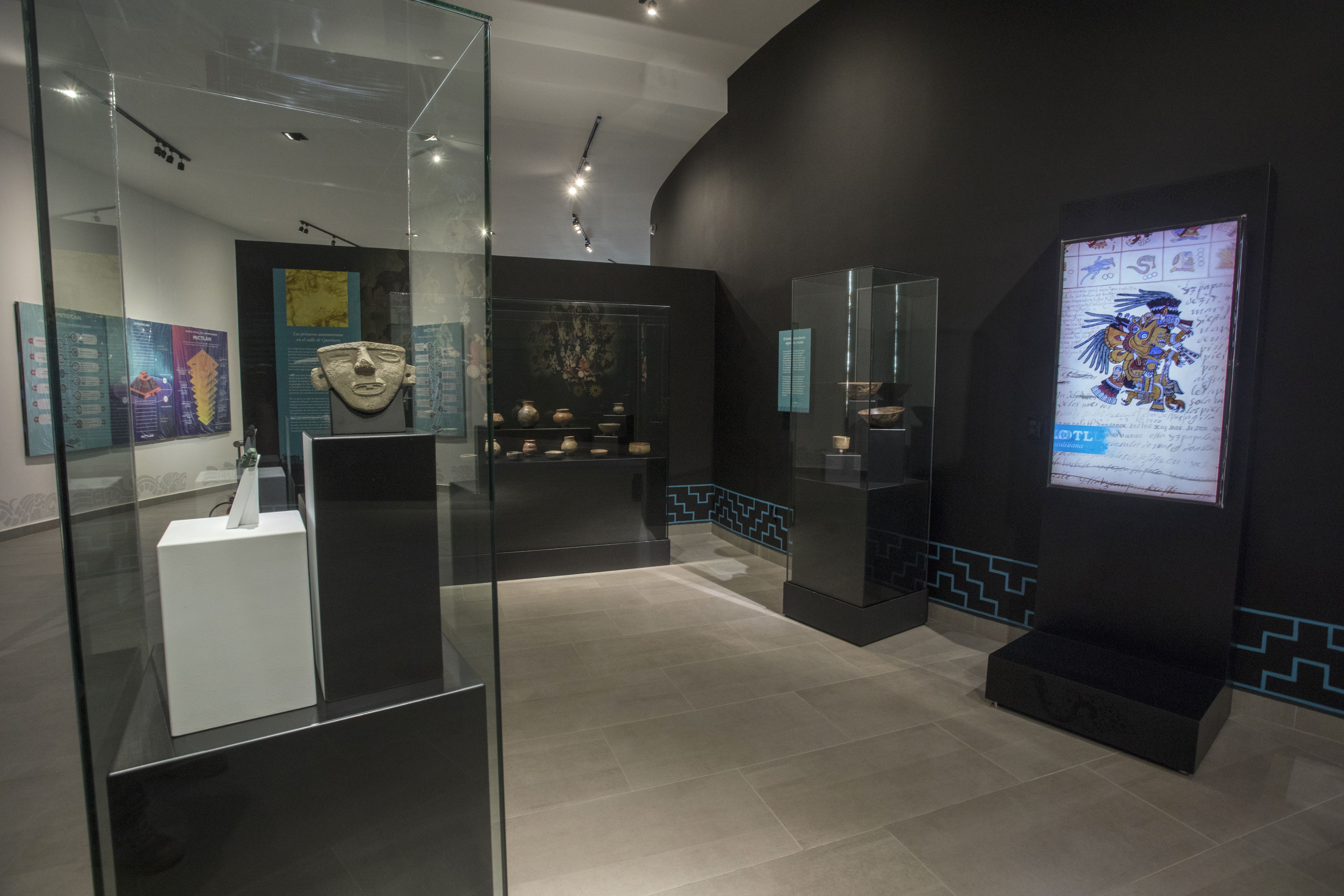
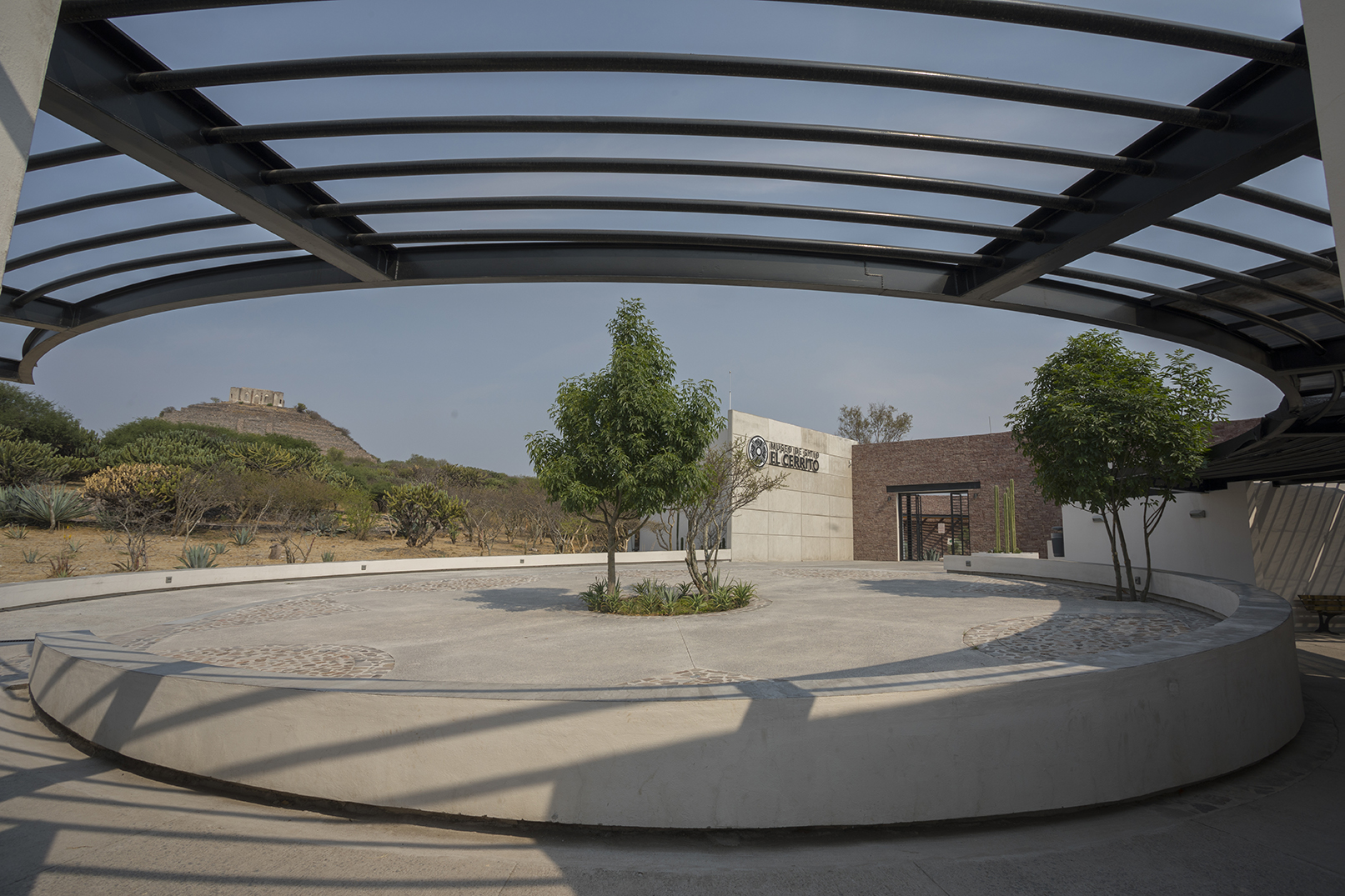
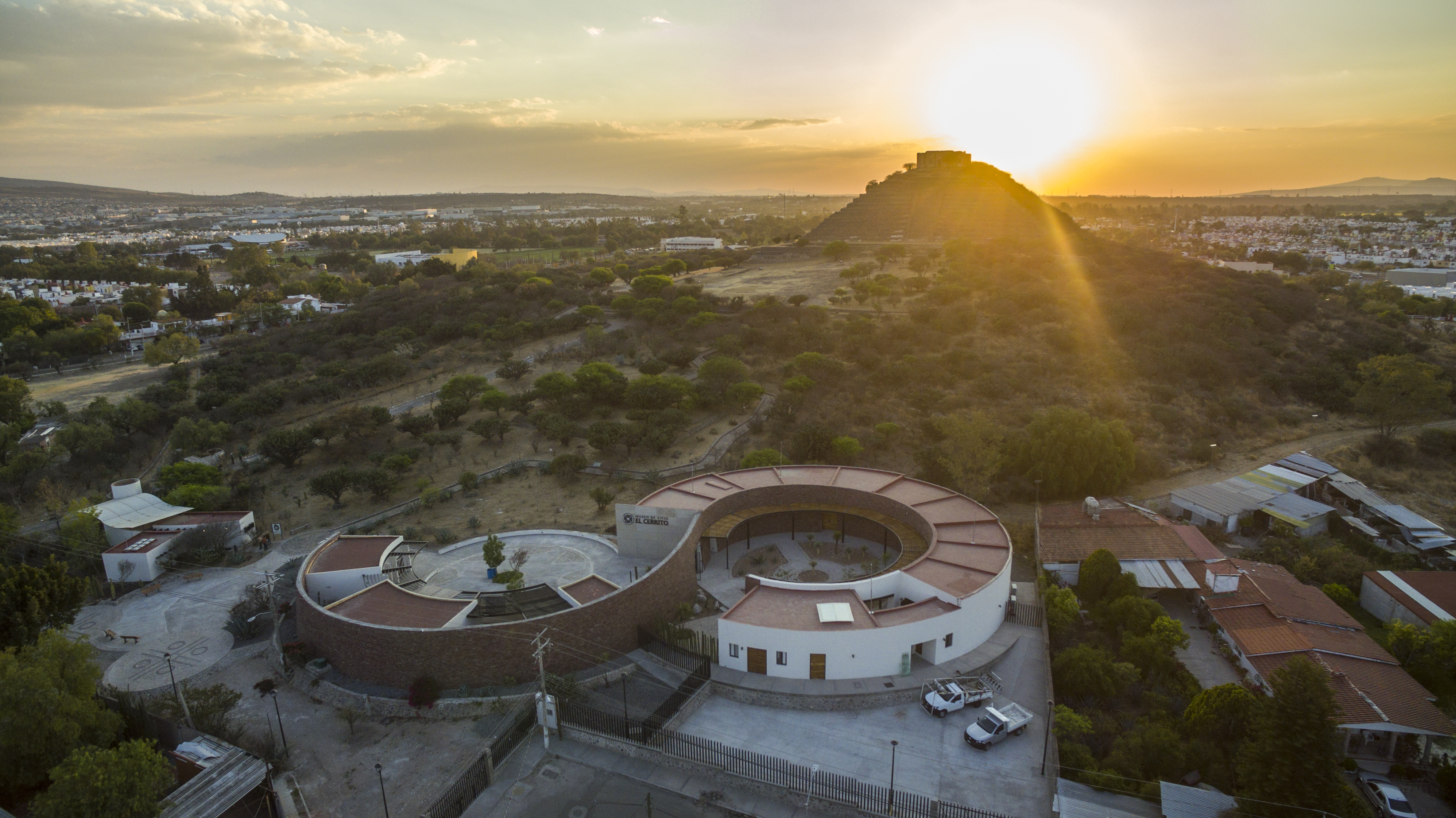
The museum presents the history of the archeological zone, taking the Toltec worldview as its starting point. The El Cerrito site is the northernmost ceremonial center in Mesoamerica and the site museum exhibits items recovered during the excavation. It is the museum for the most important archeological zone in the state of Querétaro, covering 350 square meters.
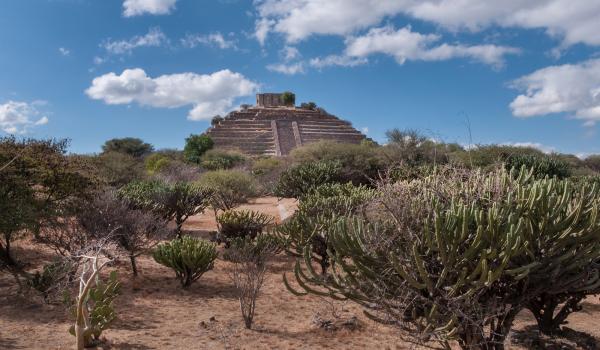
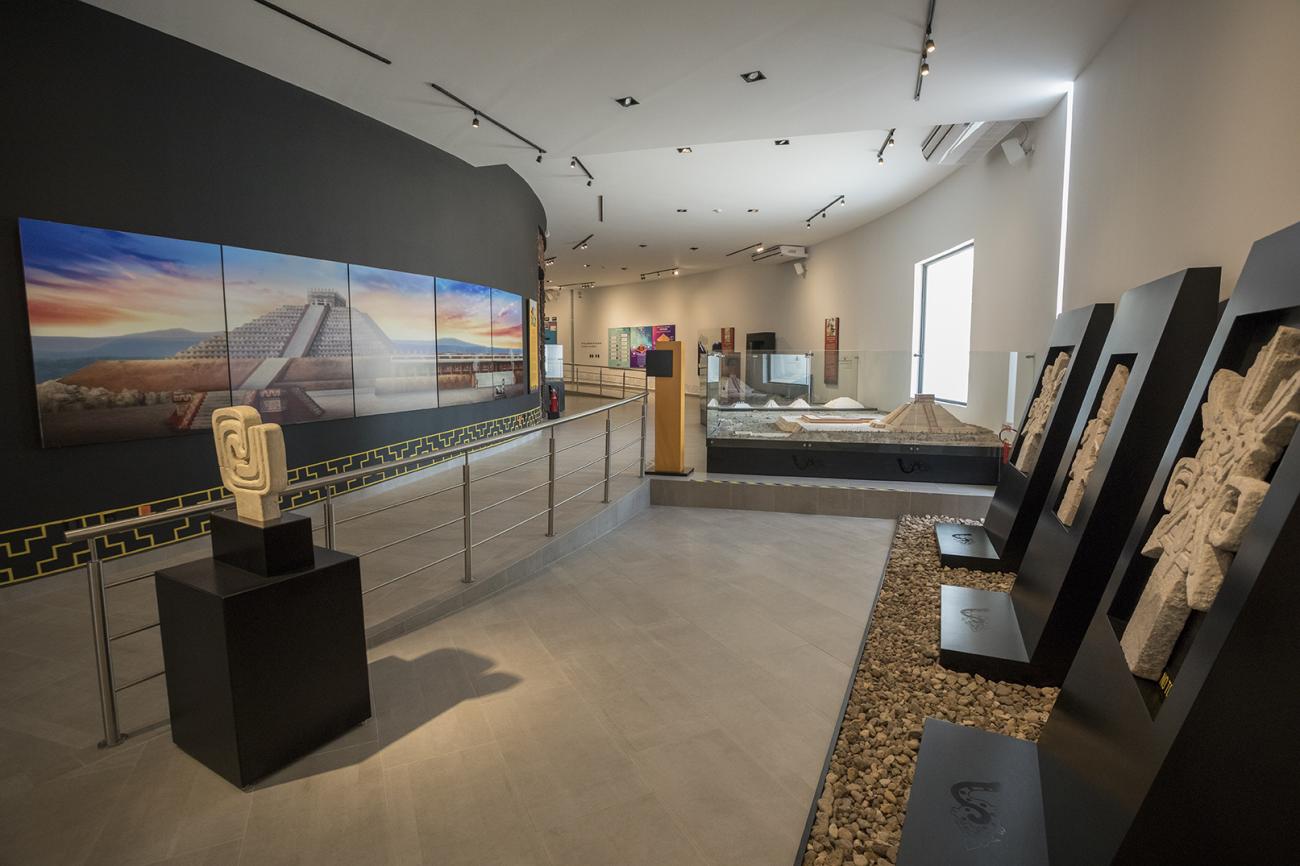
The exhibition layout describes the ceremonial center of El Cerrito, which had clearly delimited plazas, altars, and a pyramid with 13 sloping-walled terraces each with a height of 1.8 to 2 meters, giving a total of 30 meters. The museum aims to help visitors understand, enjoy, and interpret the historical and spiritual power of the site. Its history is narrated by means of four exhibition sections that display some 170 items, most recovered during the archeological excavation and research project. To these are added two private collections that were turned over to the INAH for safekeeping, and objects belonging to the Queretaro Regional Museum.
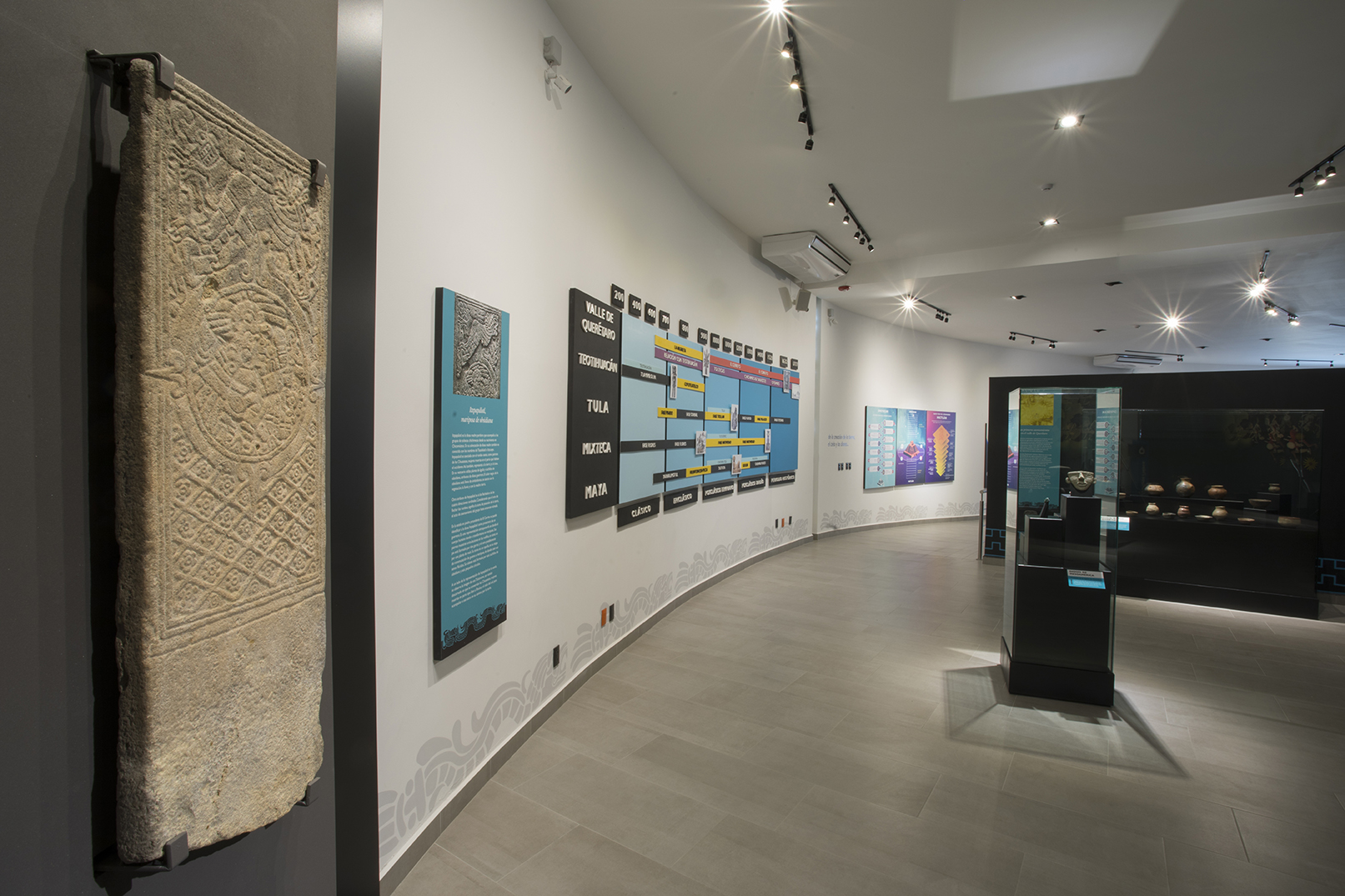
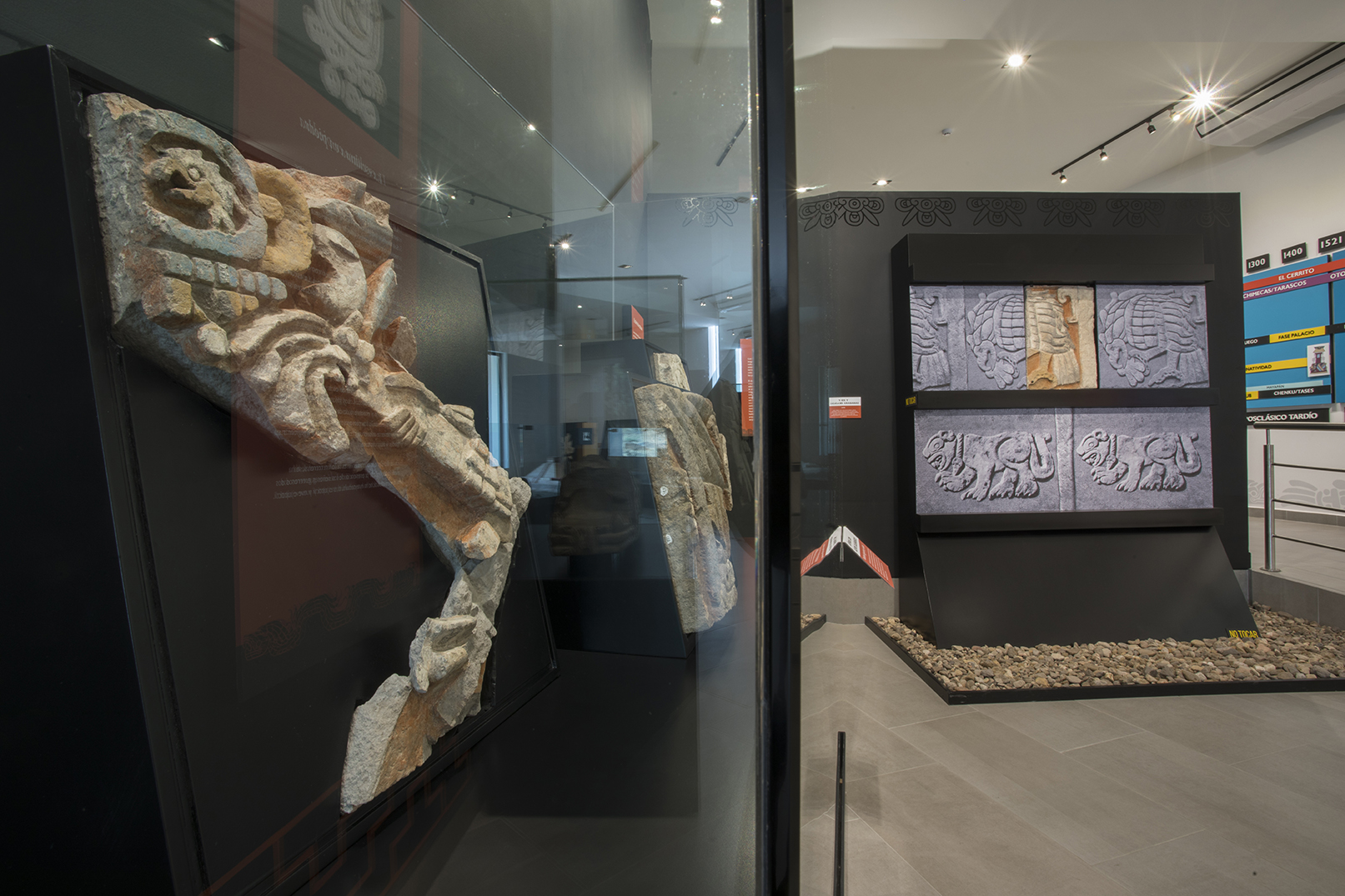
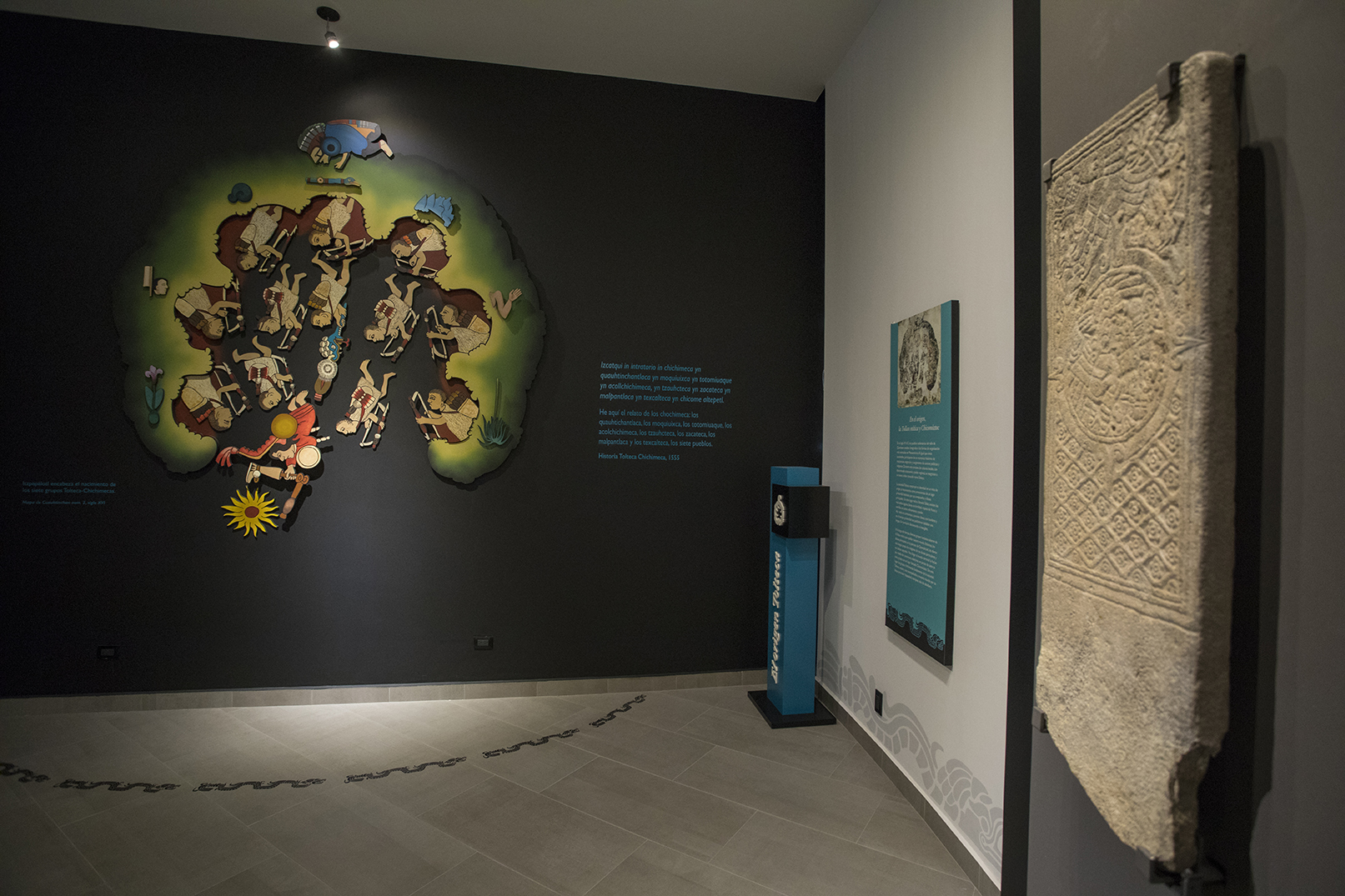
One of the most notable pieces is a stele with the image of the goddess Itzpapálotl (the butterfly with obsidian wings), a deity venerated by the Toltecs at El Cerrito. This is an important work because the goddess appears in a number of codices, but only three sculptures have been found that depict her: one at a site in Tula, Hidalgo, one at Tenango del Aire, State of Mexico, and this one. Over the years of exploratory excavations, multiple pieces of evidence related to Itzpapálotl have been found at El Cerrito, clearly indicating that it is the central deity of the site.
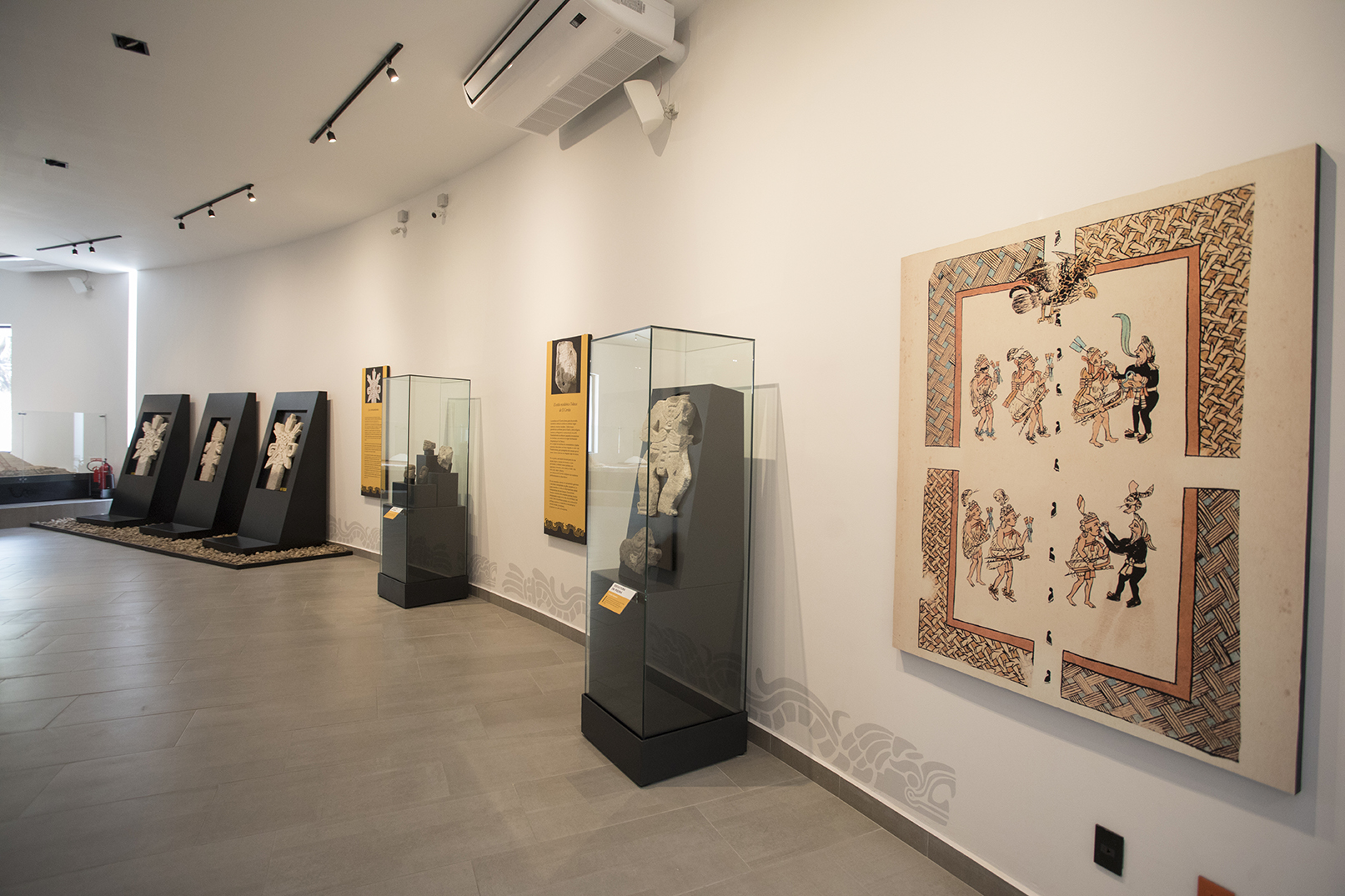
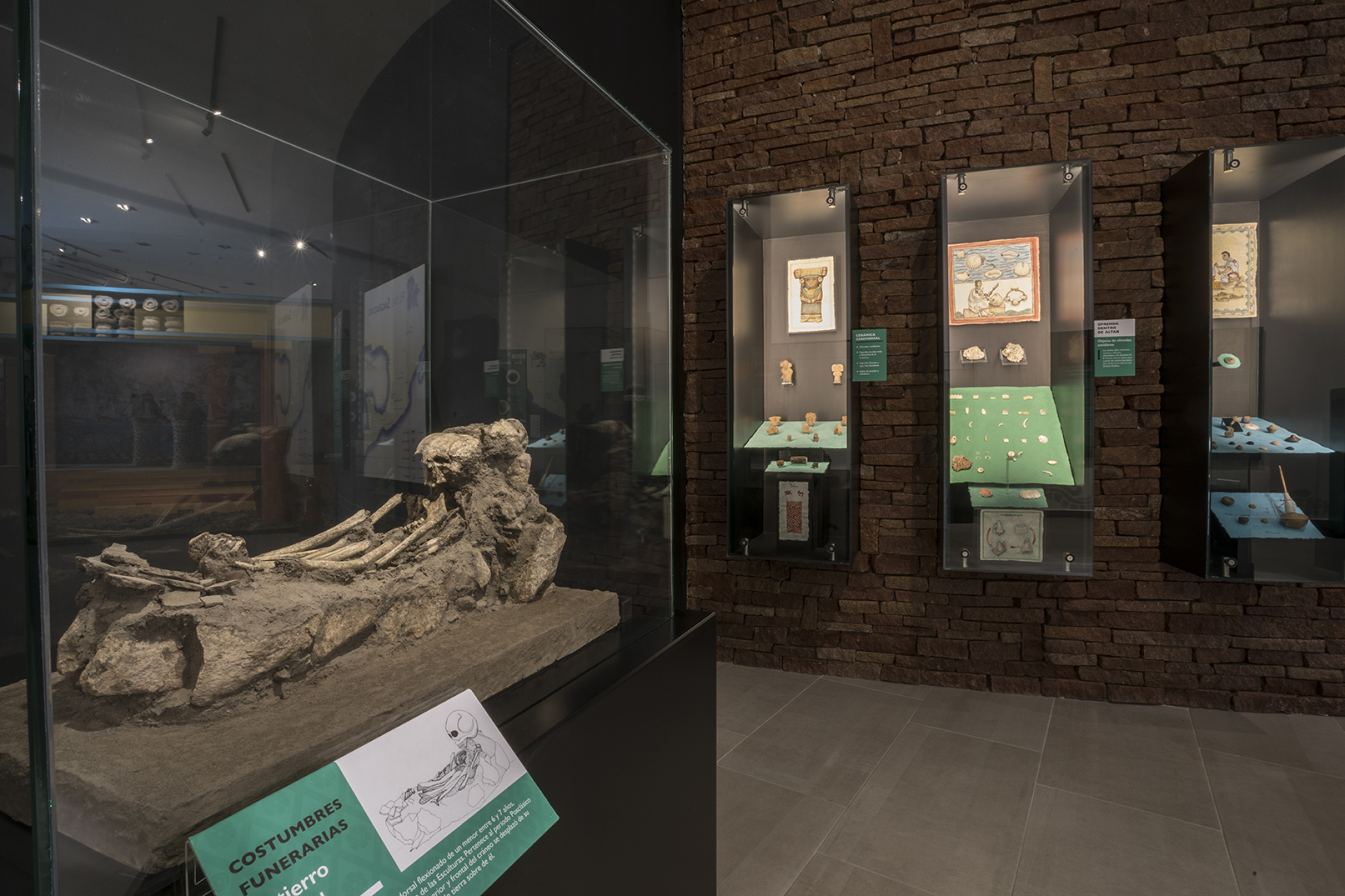
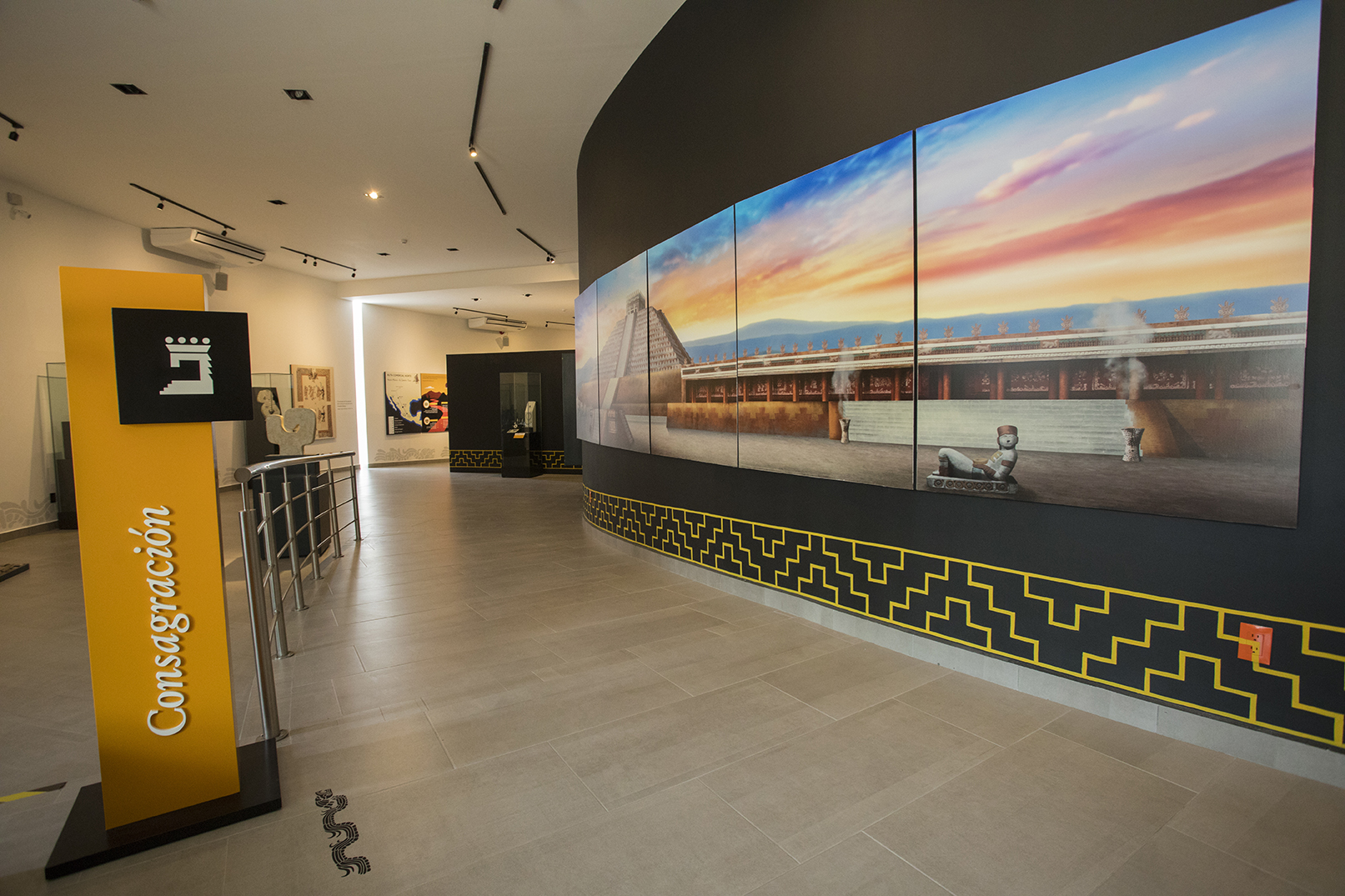
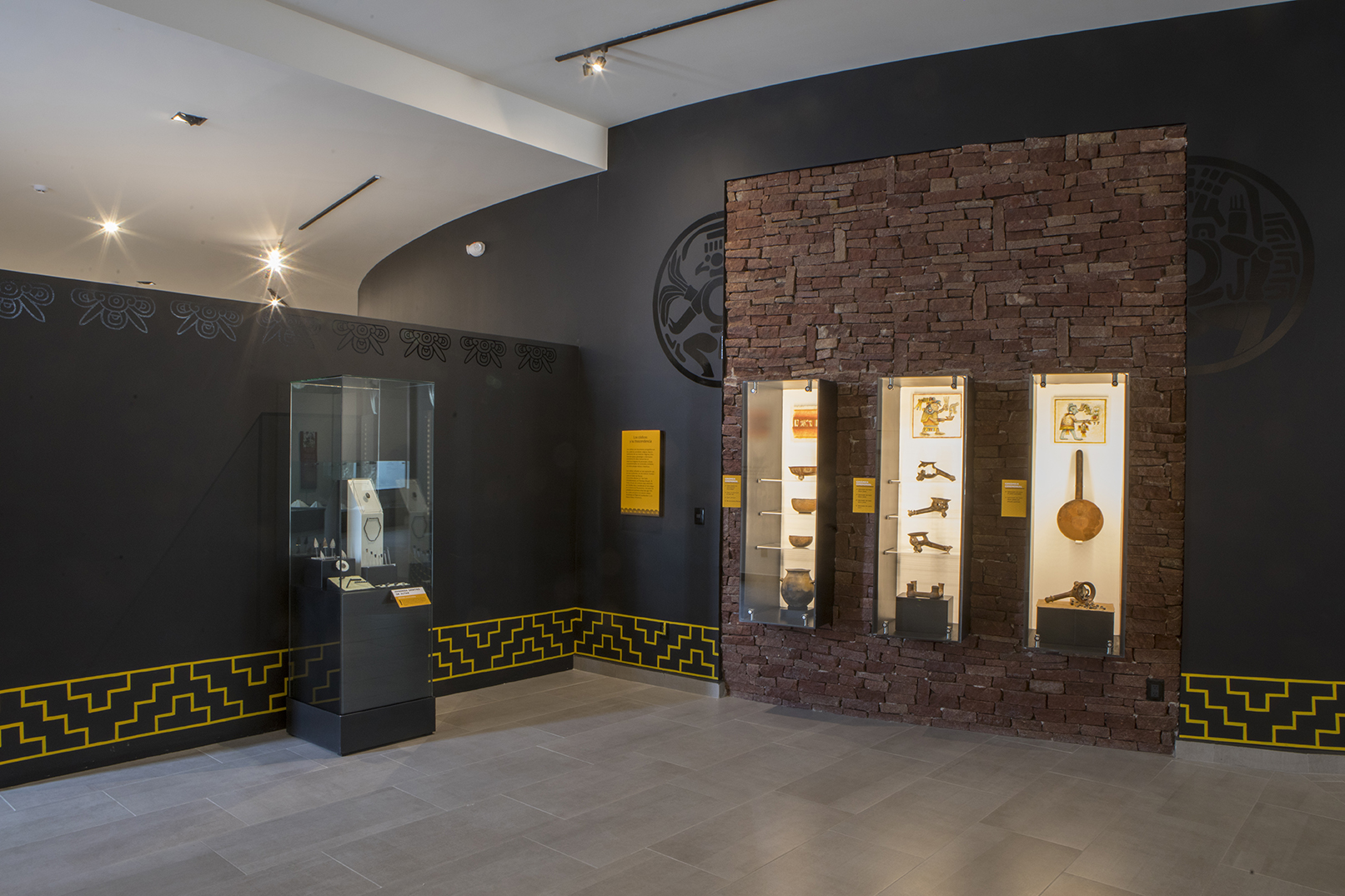
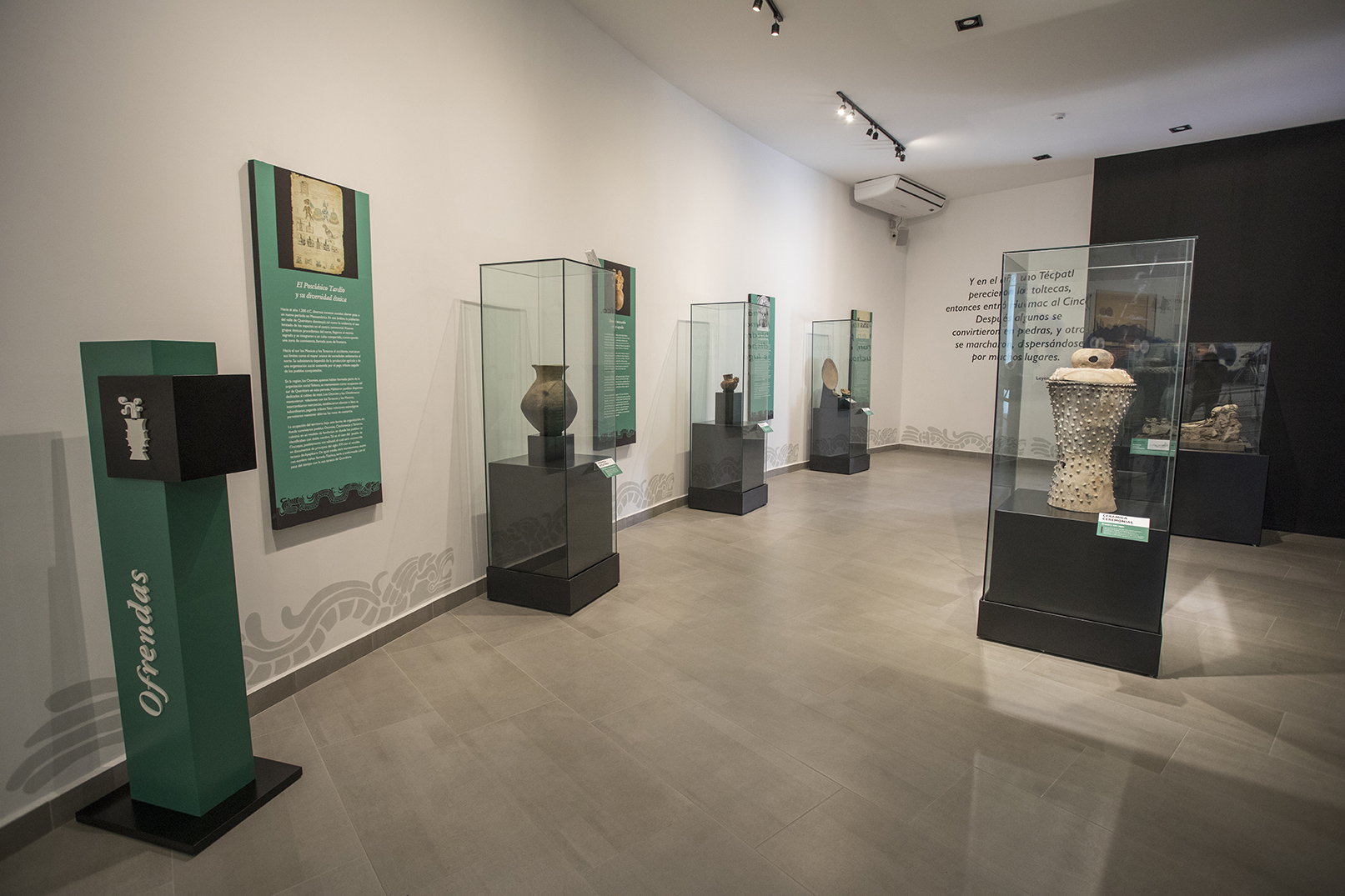
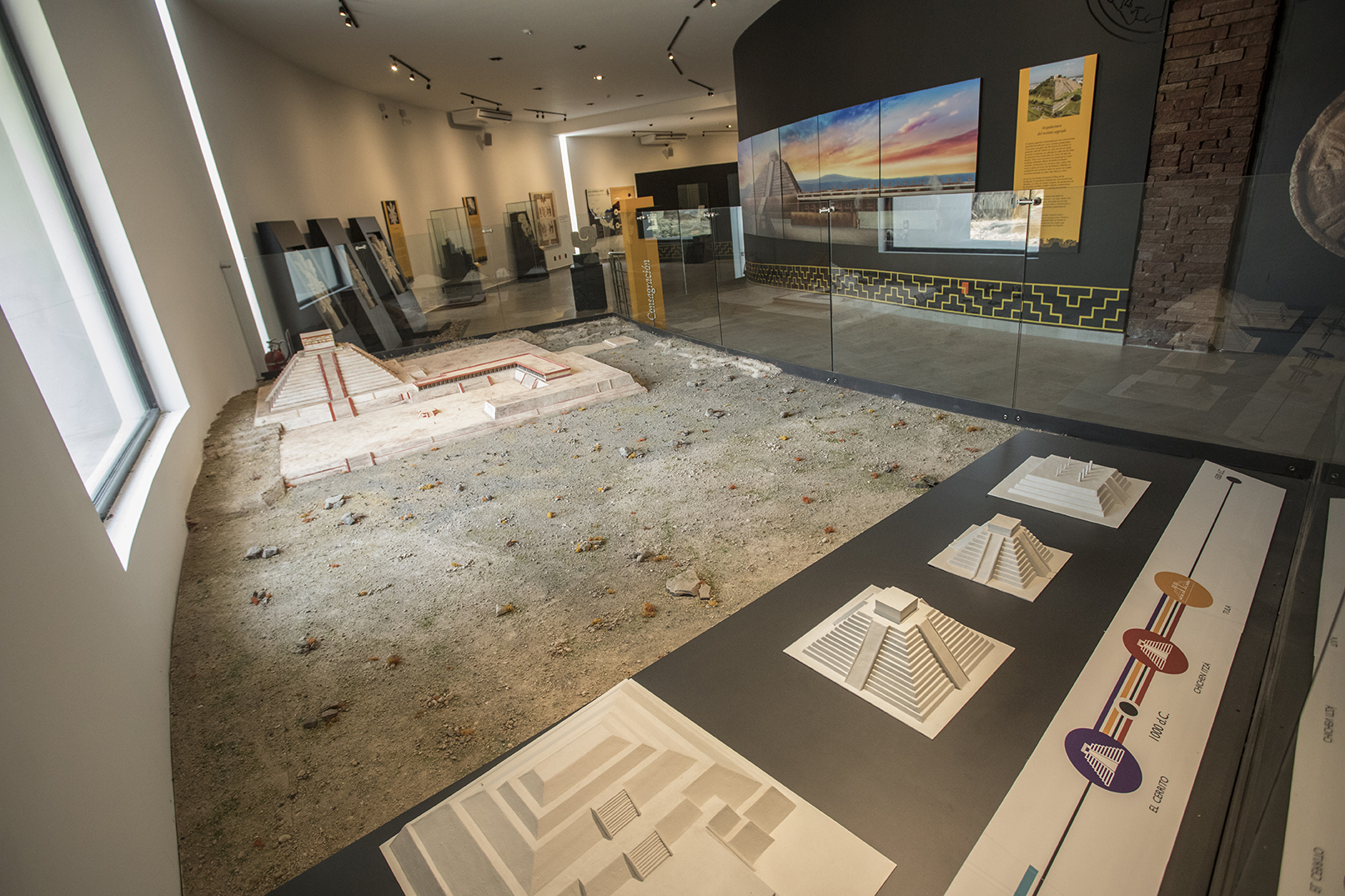
The exhibition begins with the Toltecs’ conception of their mythical origin, which defines them as a civilized people who know where they come from, and why their goddess Itzpapálotl accompanies them. To recreate the myth, the exhibition presents an image from the Map of Cuauhtinchan II. The second section of the exhibition focuses on the architecture of sacred spaces, setting out how a ceremonial center is constructed, the materials used, the pigments, and the sculptures, so important to the Toltecs. This section displays a model with a hypothetical reconstruction of the pre-Hispanic site at its apogee. The third part of the exhibition addresses the consecration of the space, exploring the Toltec tradition of making offerings of all their constructions. Whenever work on a building commenced, offerings were made such as incense burners, figurines and shells. At El Cerrito two offerings of this type were found, one of which is on display in the new museum. The fourth section of the exhibition deals with everyday offerings: once the site was in operation as a ceremonial center it was used for collective and private ceremonies which saw participants coming from different parts of Mesoamerica to bring offerings they deposited here. At some point El Cerrito became a major sanctuary that received pilgrims from all across Mesoamerica, as shown by the wealth of different materials such as spindles decorated with tar from the Huasteca region, shells from the Pacific, a figurine from the Altos de Jalisco, a vase from the border between Mexico and Guatemala, stone axes, pots, and shell and stone beads.
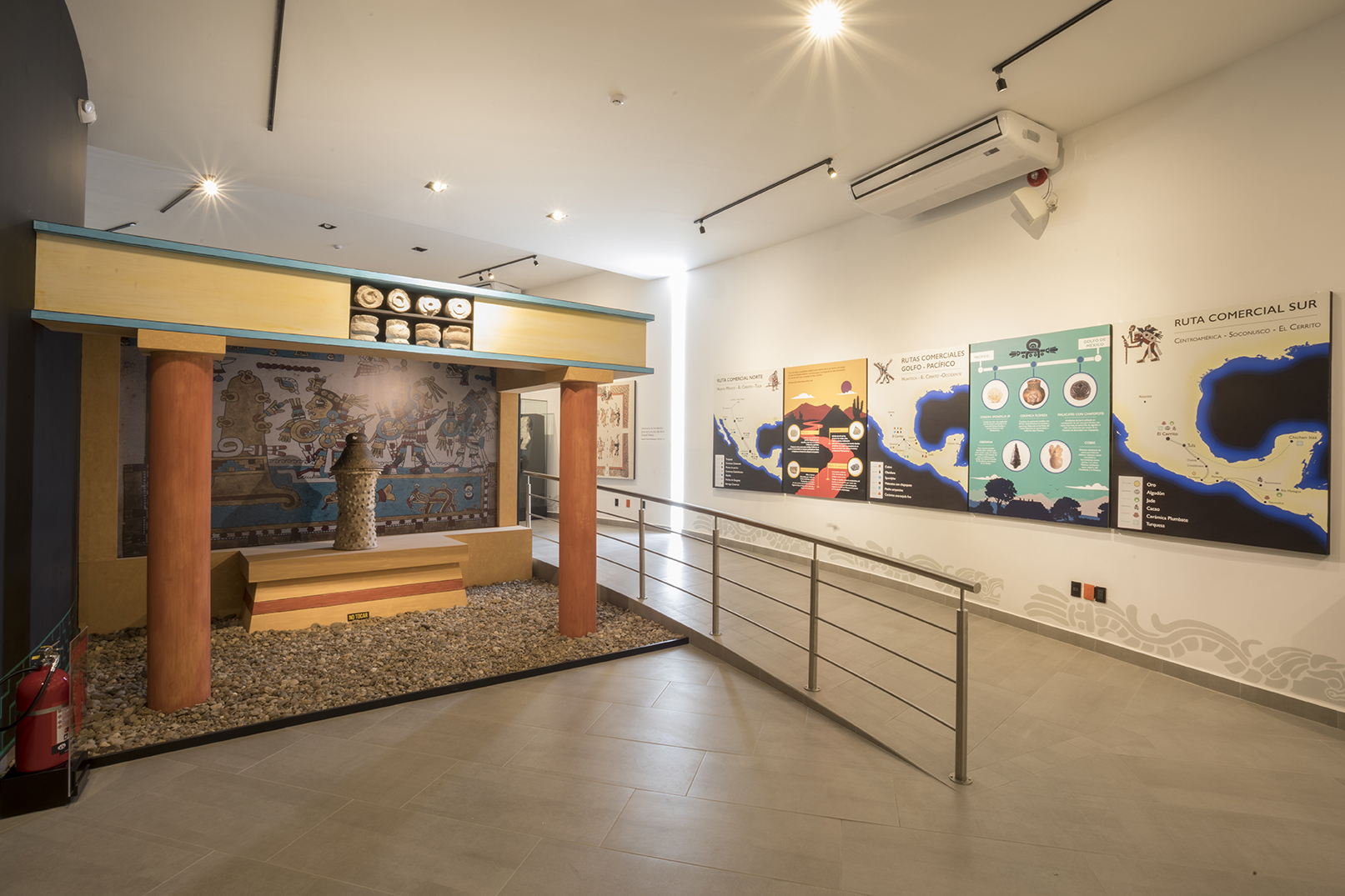
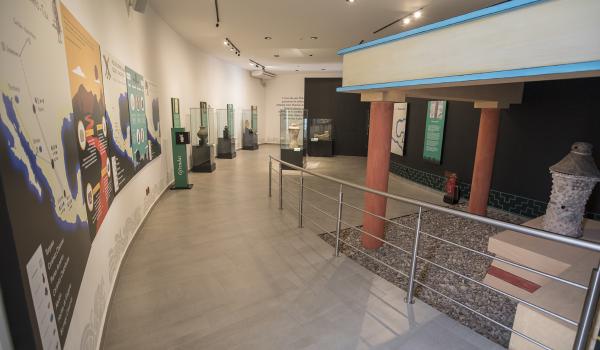
A series of drawings were prepared for the museum showing the sacred routes and trade routes that led to the spread of ideas throughout the region. This tradition of pilgrimage continued even after the arrival of the Franciscans, with the Otomi peoples continuing to place ‘pagan’ offerings. This led to the placement here of the Virgin of Pueblito, one of the principal Marian images in the colonial period, and for which a sanctuary was later constructed in the nearby village of San Francisco Galileo.
-
El Cerrito Guía Completa
Document -
El Cerrito Guía Completa
Document
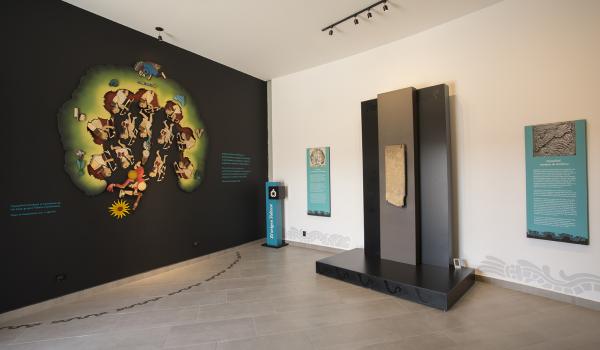
Room 1: The Origins of the Toltecs
El Cerrito was built atop a rocky outcrop in the southern part of the Querétaro Valley. Surrounded by fertile lands, a river, and a marsh, it met all the criteria for the sacred landscape of the original "Tollan", the mythic place of origin of the Toltec-Chichimeca peoples. In this primordial land…
Room 1: The Origins of the Toltecs
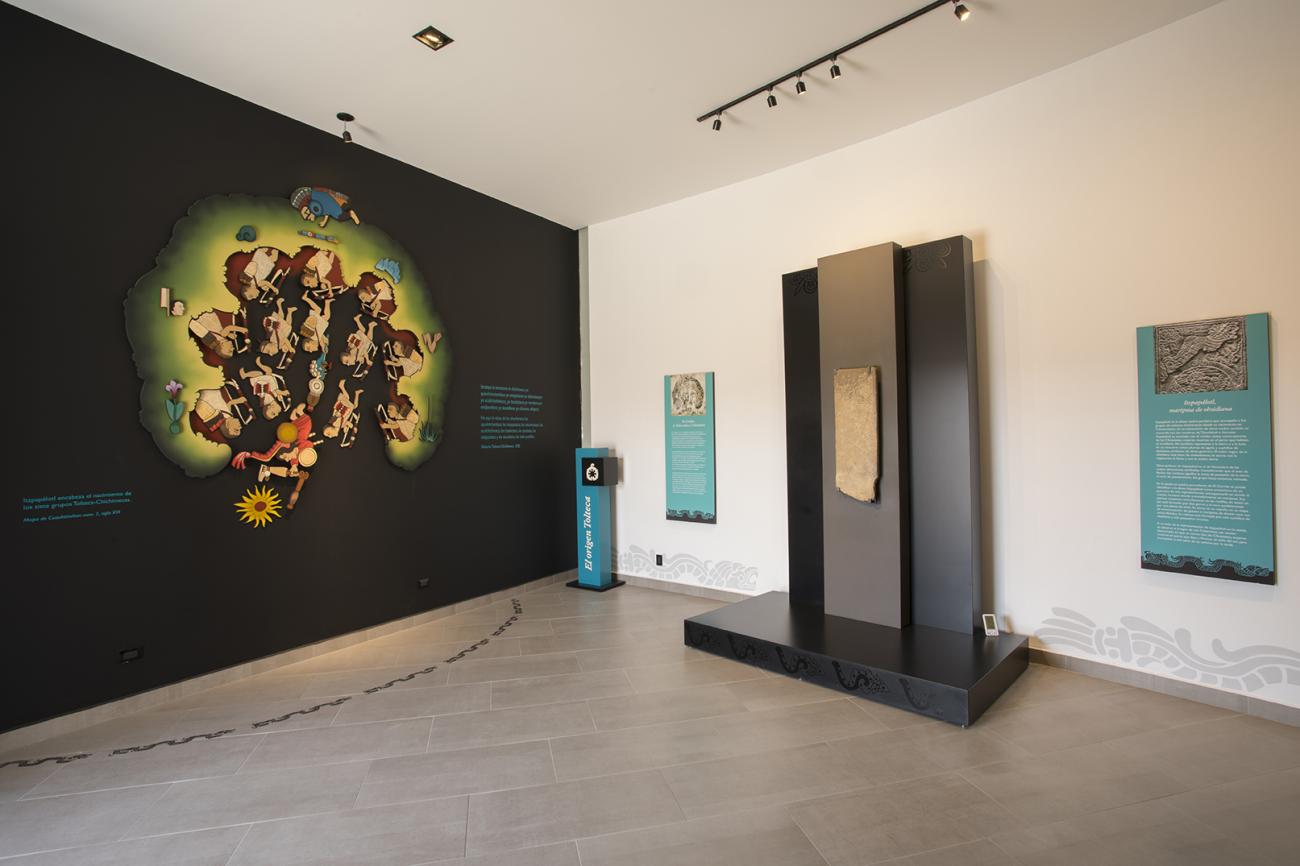
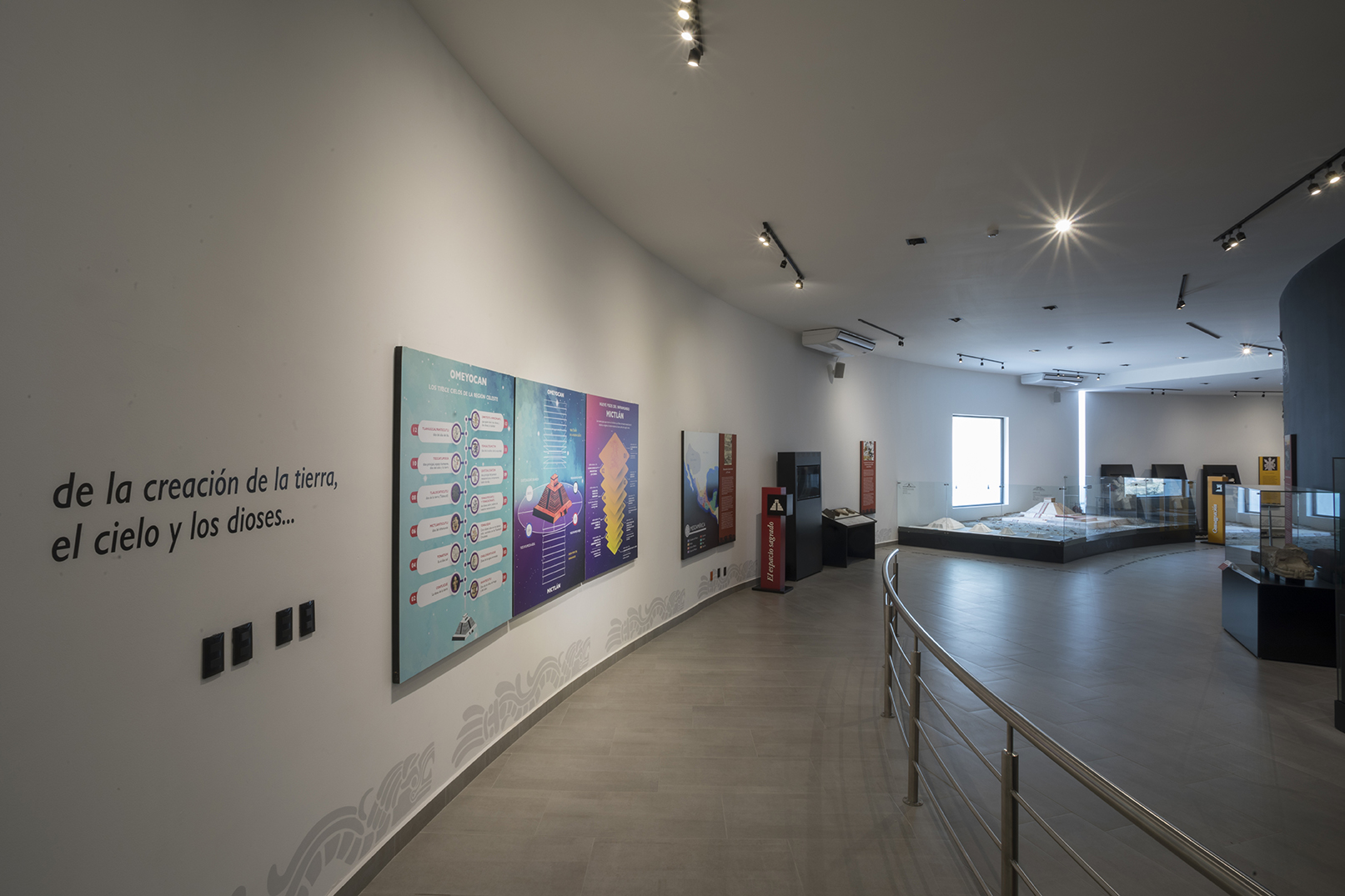
El Cerrito was built atop a rocky outcrop in the southern part of the Querétaro Valley. Surrounded by fertile lands, a river, and a marsh, it met all the criteria for the sacred landscape of the original "Tollan", the mythic place of origin of the Toltec-Chichimeca peoples. In this primordial land, people had all the resources needed to survive and lived in harmony with their main deities. When it was time to send different peoples to inhabit the world, each group was given a patron god and a specific language. This origin story is depicted in the "Codex Cuauhtinchan 2", which shows "Chicomoztoc", the Hill of the Seven Caves, from which the seven Toltec-Chichimeca peoples emerge to populate the earth, guided by their patron goddess "Itzpapálotl".
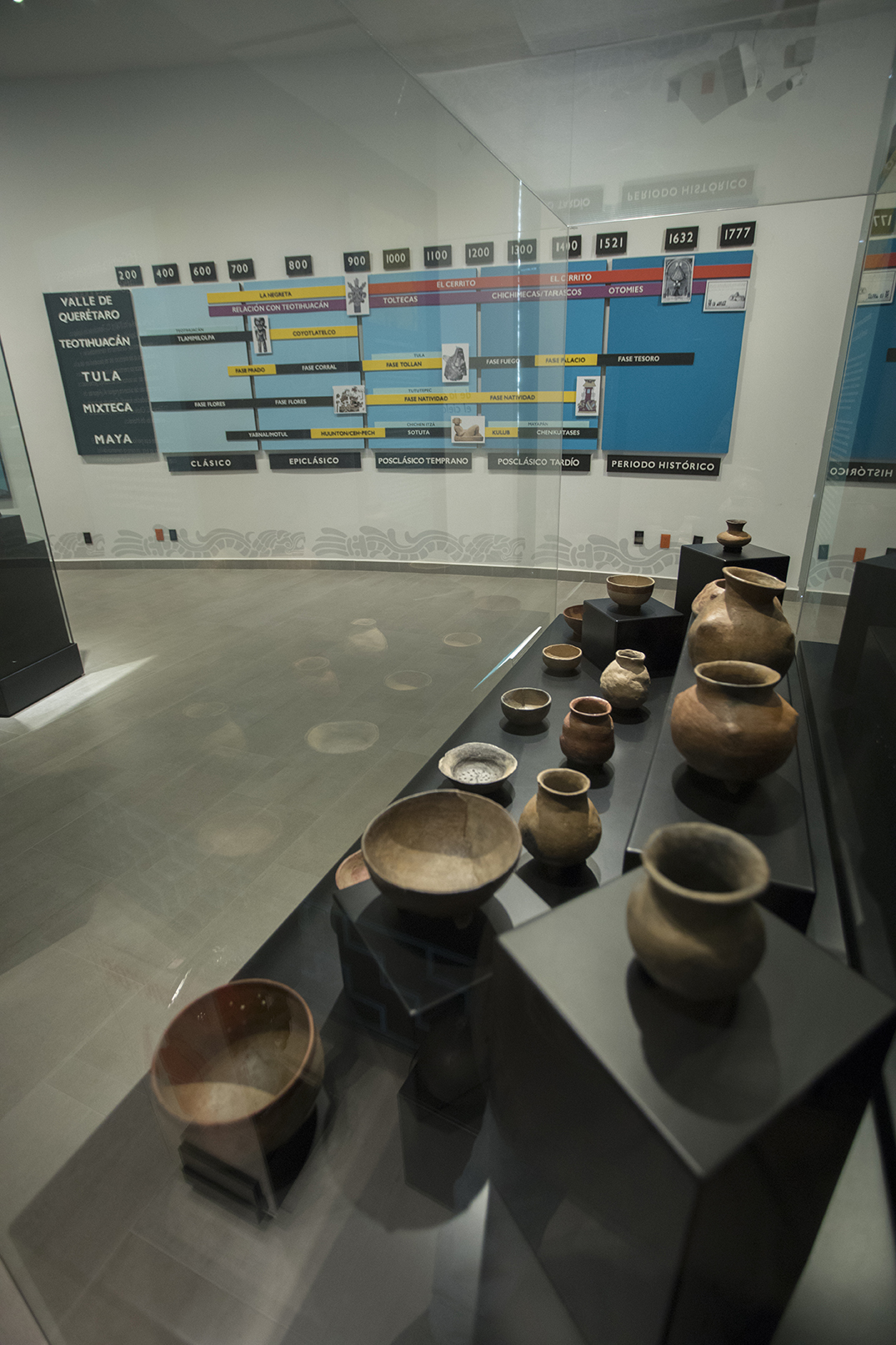
In this gallery, you can see the only known carved stone stela in Mesoamerica depicting the goddess "Itzpapálotl", discovered at El Cerrito. A timeline also highlights the major Toltec sites across Mesoamerica: Tula, Chichén Itzá, Tututepec, and El Cerrito.
Room 2: Constructing the Sacred Space
Around 900 CE, the Toltecs founded a new earthly "Tollan" in northern Mesoamerica. The architecture created there represented the most advanced construction of its time—both in scale and in symbolic complexity. Notable features include sunken courtyards, sloped and panelled walls adorned with…
Room 2: Constructing the Sacred Space
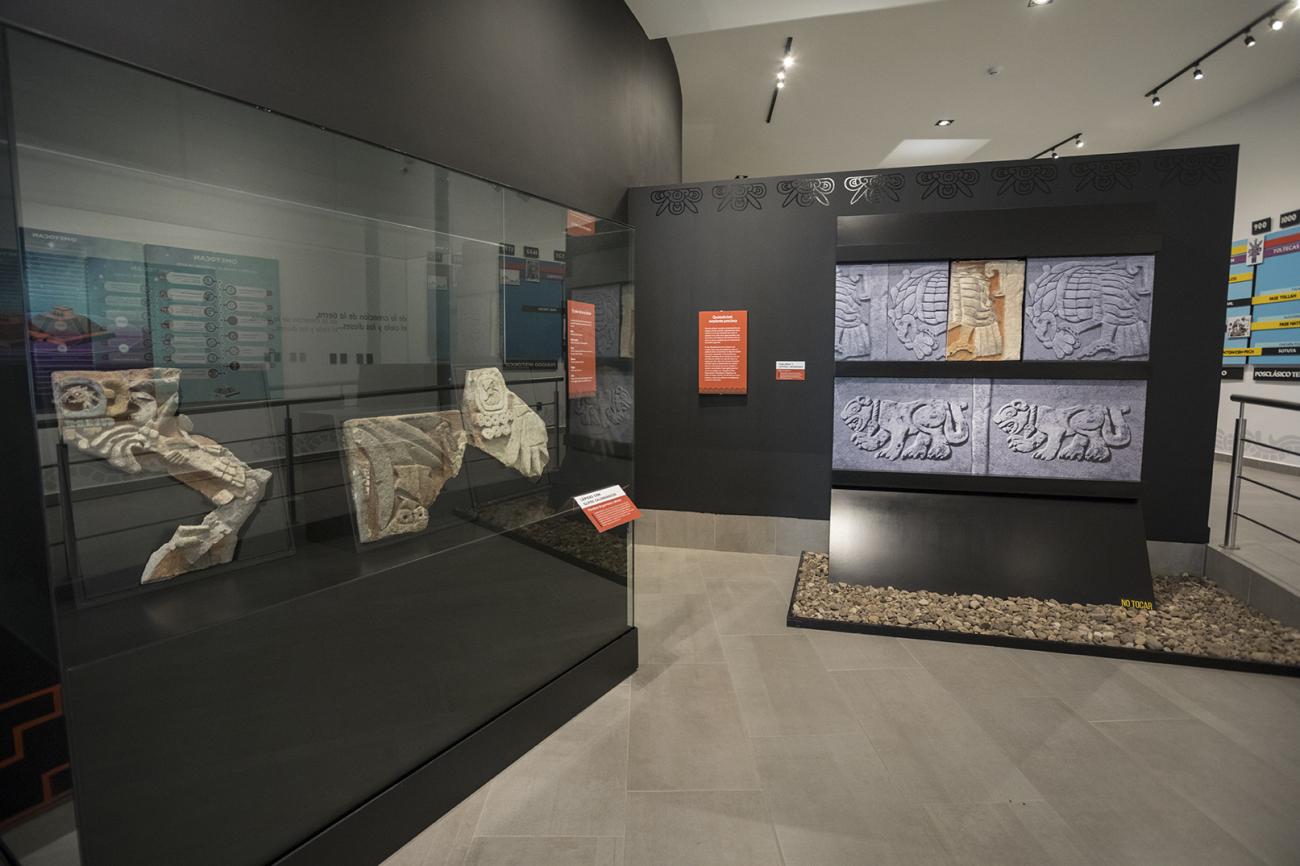

Around 900 CE, the Toltecs founded a new earthly "Tollan" in northern Mesoamerica. The architecture created there represented the most advanced construction of its time—both in scale and in symbolic complexity. Notable features include sunken courtyards, sloped and panelled walls adorned with sculpture, skull-offering altars, and columned halls. Among these structures stands a unique thirteen-tiered pyramid—the only one of its kind in Mesoamerica. According to Toltec cosmology, the pyramid symbolized one of the three cosmic layers: the heavens, the earth, and the underworld.
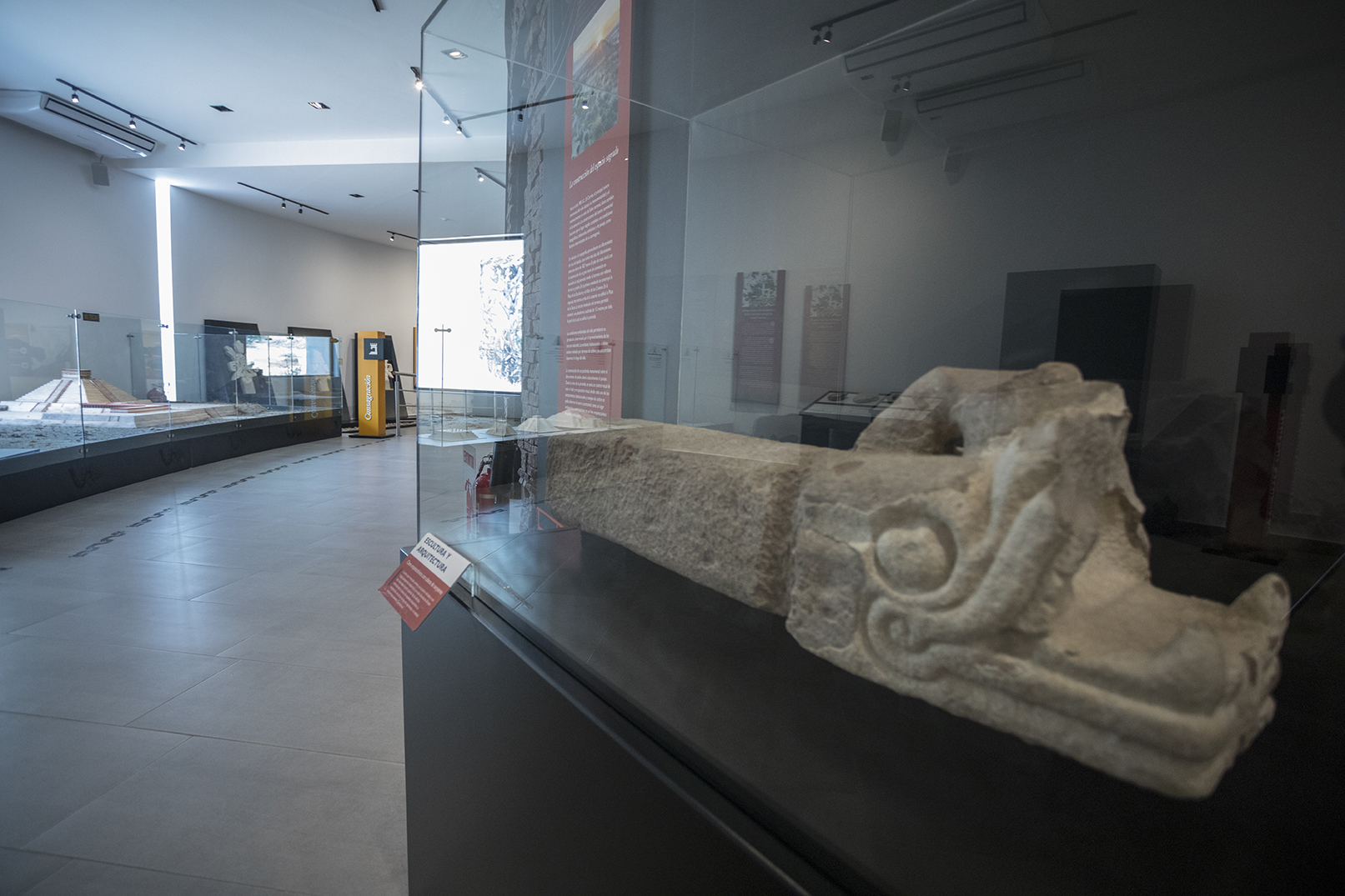
Pyramids were often built over springs or caves, believed to be the passageway of the cosmic axis that connected all planes of existence. In Room 2, visitors will find illustrated panels explaining this concept, sculptures with calendrical glyphs, and an architectural element shaped like a serpent’s head. The room concludes with a scale model that reconstructs the ceremonial center—centered on the pyramid—which can also be viewed through the museum’s only window.
Room 3: Sanctifying the Space
Ceremonial centers were rich in offerings. Some were "constructive offerings"—objects intentionally buried within altars during their construction as gifts to the gods or natural forces. Each offering was unique and tied to the specific deity a temple was dedicated to.One such offering, found…
Room 3: Sanctifying the Space
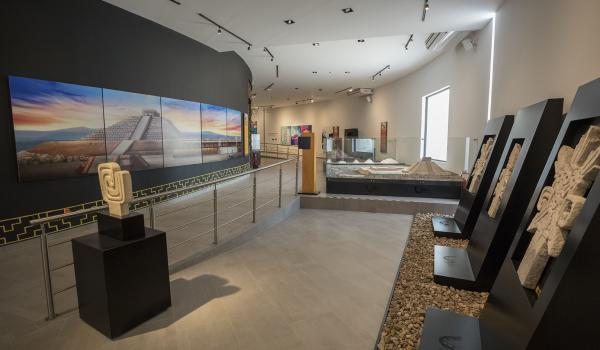
Ceremonial centers were rich in offerings. Some were "constructive offerings"—objects intentionally buried within altars during their construction as gifts to the gods or natural forces. Each offering was unique and tied to the specific deity a temple was dedicated to.
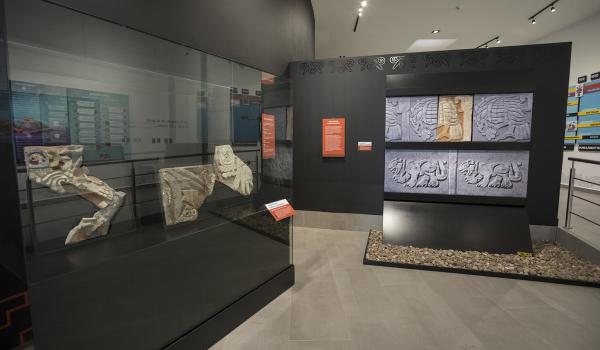
One such offering, found inside a small altar, was dedicated to the goddess "Itzpapálotl". It included hand-held incense burners containing burned white flint blades, skull-shaped shell beads, and obsidian tubes. Large-format sculptures, known as "coronamientos," were also discovered here. These soft-stone carvings originally decorated the upper façades of columned halls. Some, with crossed dart motifs, belonged to a hall at the pyramid’s base dedicated to an omnipresent deity such as "Quetzalcóatl". Others, with solar dart motifs, adorned the façade of a southern hall devoted to a solar deity.
Room 4: Daily Offerings
The plazas and altars of the site also served daily ritual purposes, where offerings were made to sanctify the space—many burned in large ceremonial braziers. The centerpiece of this gallery is an hourglass-shaped brazier in which items such as bone awls, projectile points, clay spindle whorls, and…
Room 4: Daily Offerings
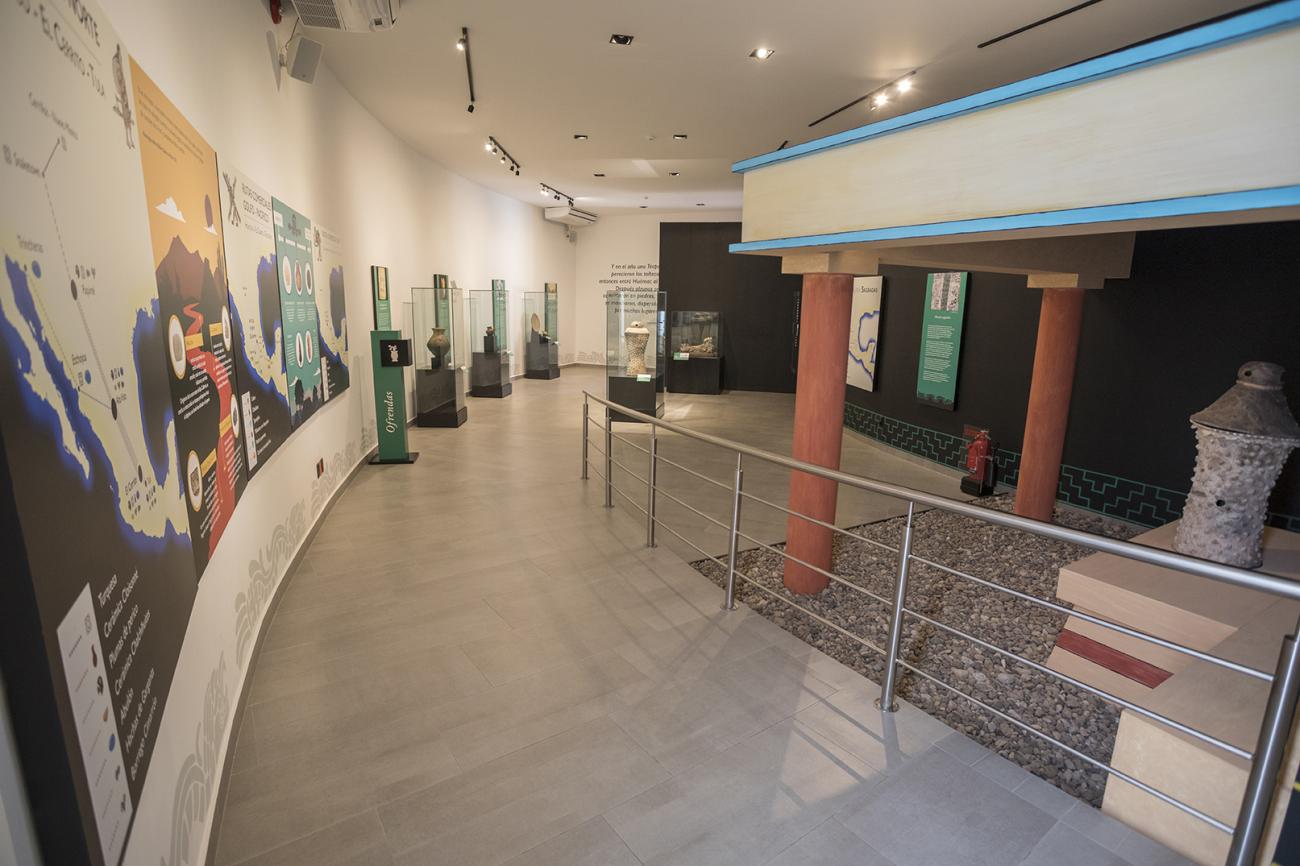

The plazas and altars of the site also served daily ritual purposes, where offerings were made to sanctify the space—many burned in large ceremonial braziers. The centerpiece of this gallery is an hourglass-shaped brazier in which items such as bone awls, projectile points, clay spindle whorls, and personal ornaments like shell pendants and rings were burned.
Other items, not burned, came from far-flung regions—including "abalone" and "spondylus" shells, clay spindle whorls decorated with tar, lead-glazed vessels, clay figurines, and even a copper bell. This wide variety of origins points to an intense network of trade stretching across Mesoamerica from south to north and east to west. Visitors can examine detailed maps that illustrate not only the flow of goods but also the diffusion of Toltec symbols and iconography—such as "Chac Mool" and "Itzpapálotl"—throughout the region.
Garden
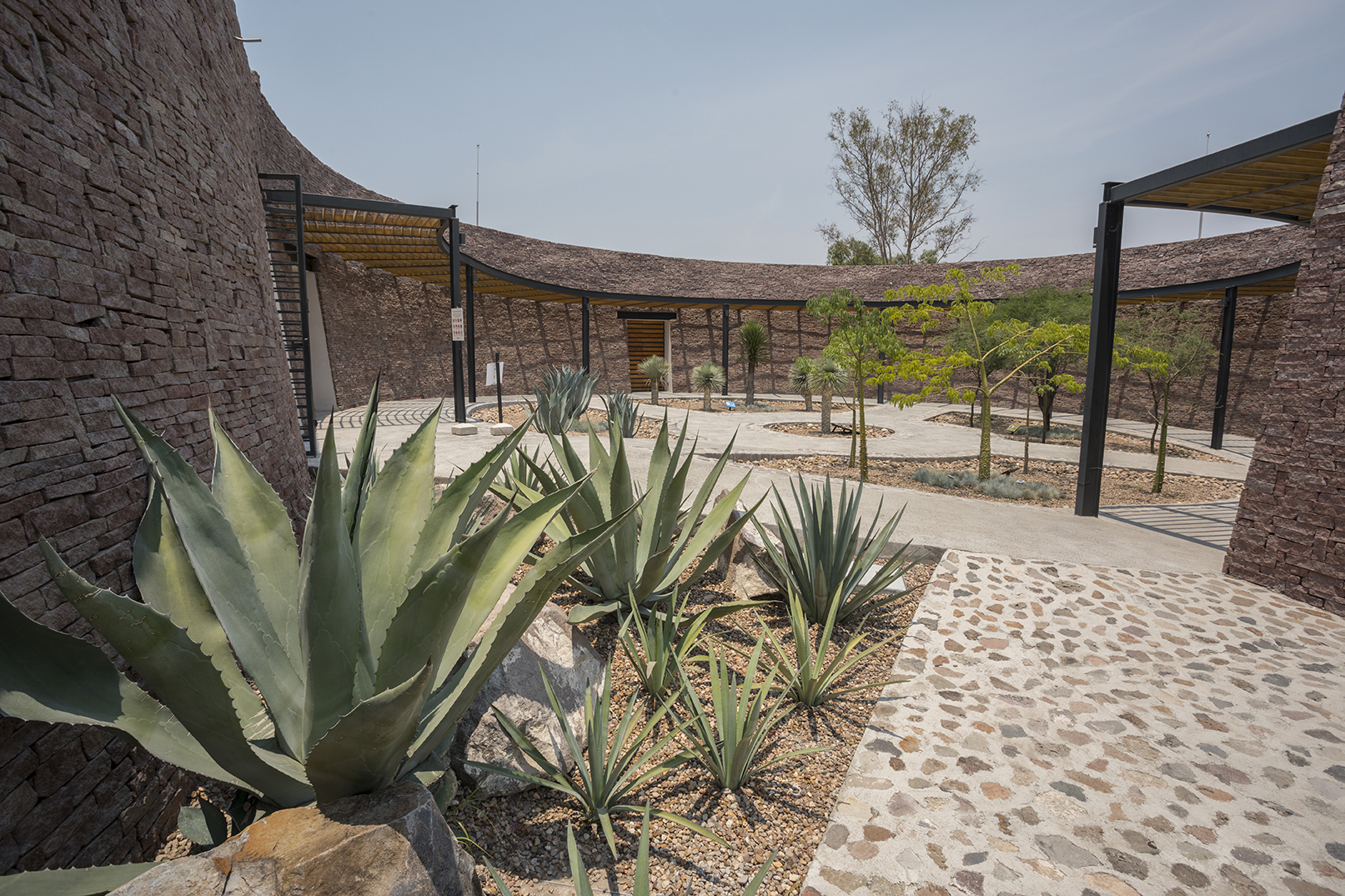
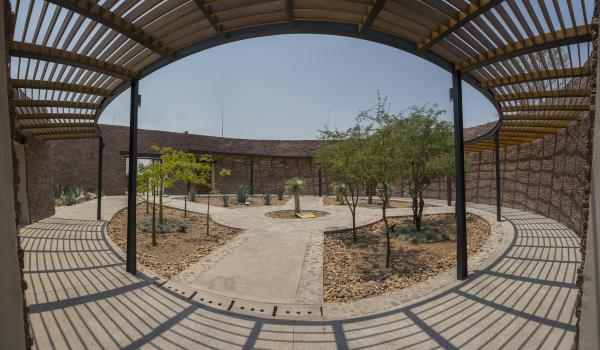
The museum’s central garden was designed to reflect the Toltec vision of the earthly plane. According to the Historia Tolteca-Chichimeca codex, the terrestrial world was divided into four cardinal directions, each upheld by a sacred cosmic tree.The east, associated with the color red, was supported…
Garden
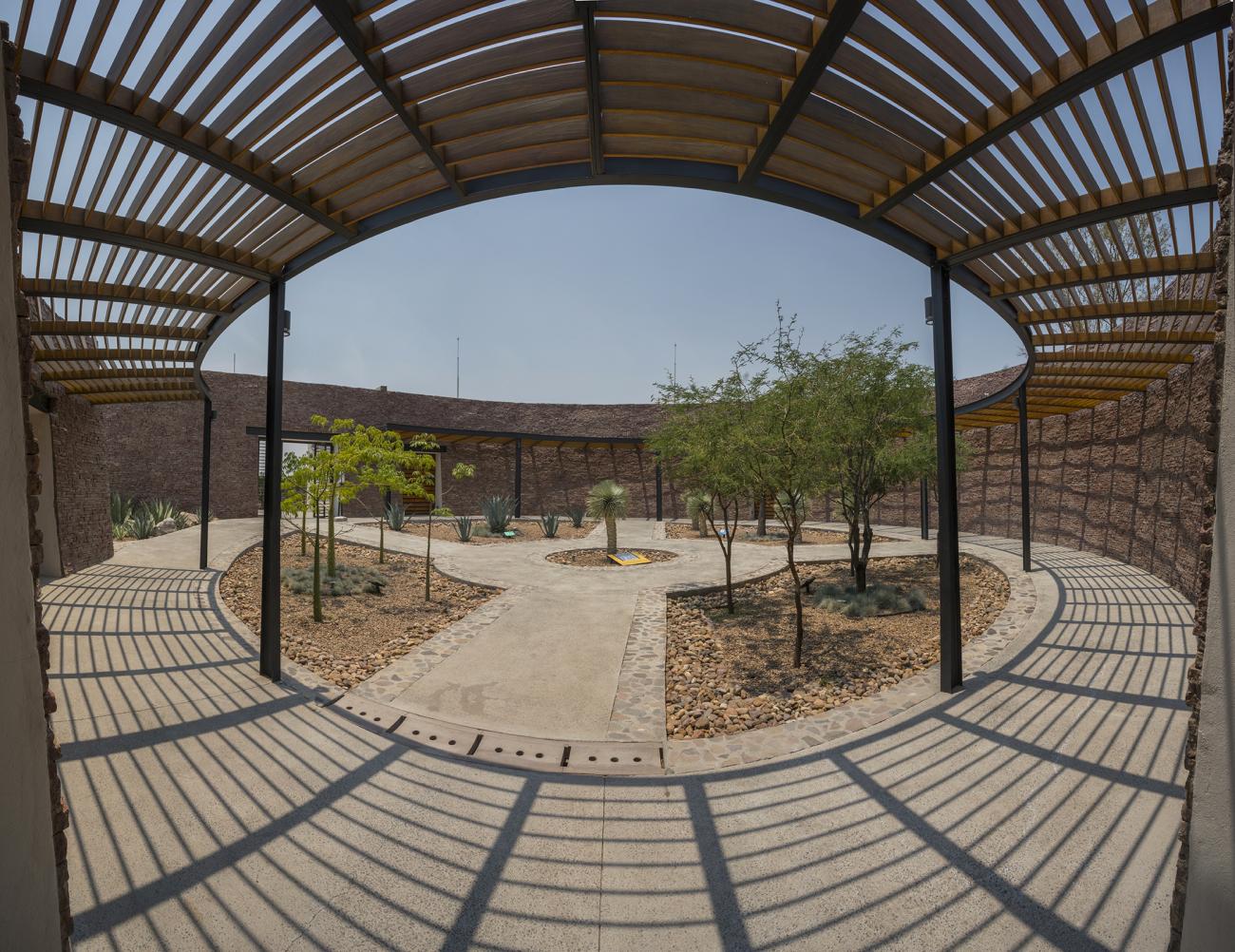
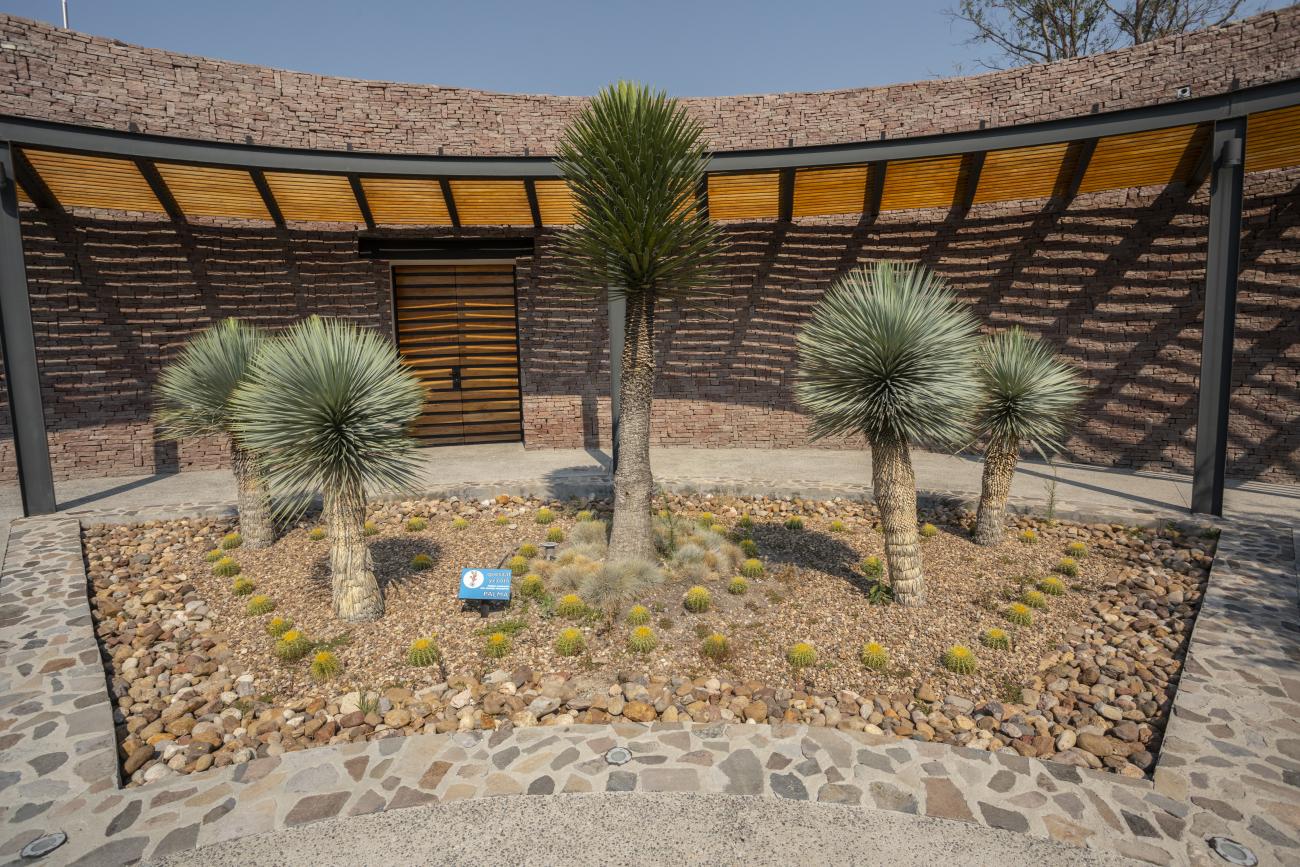
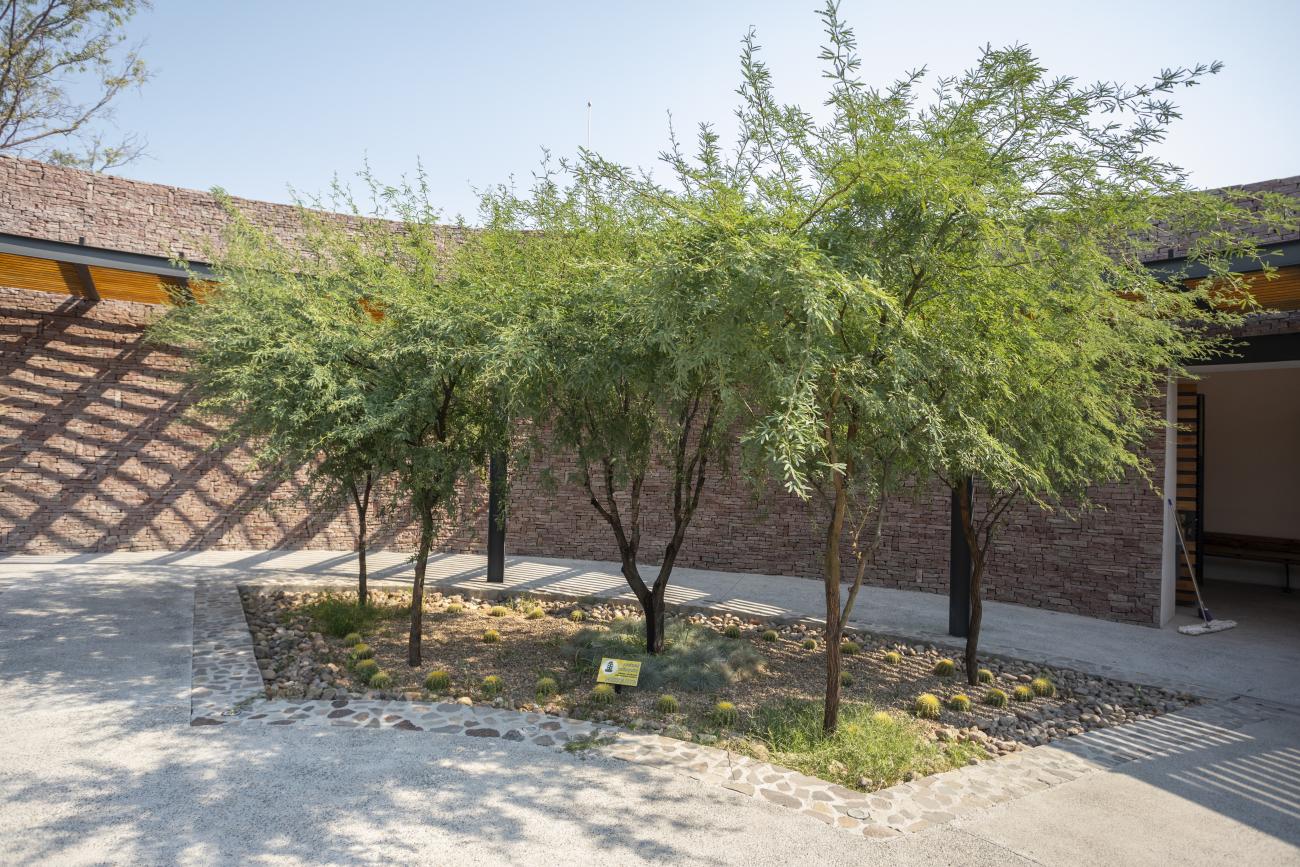

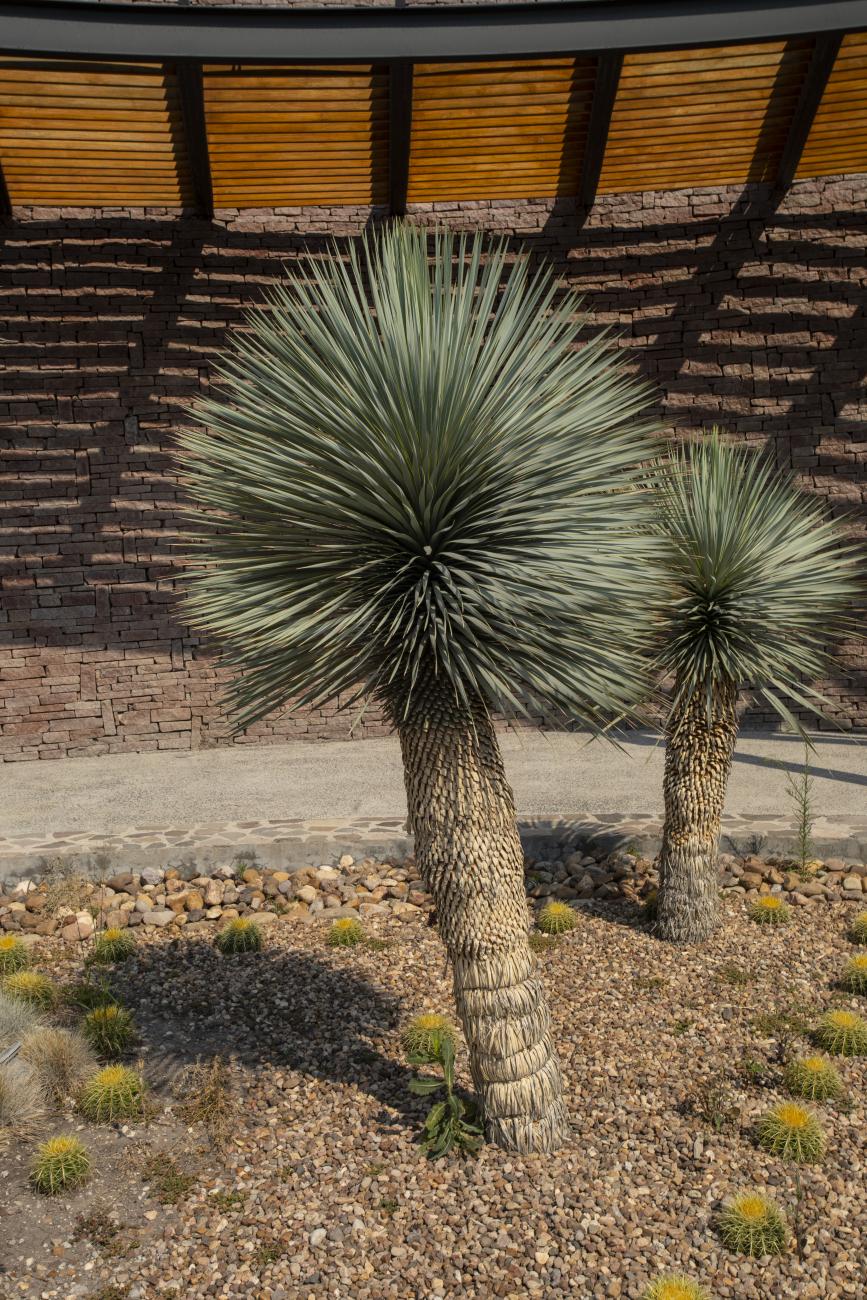
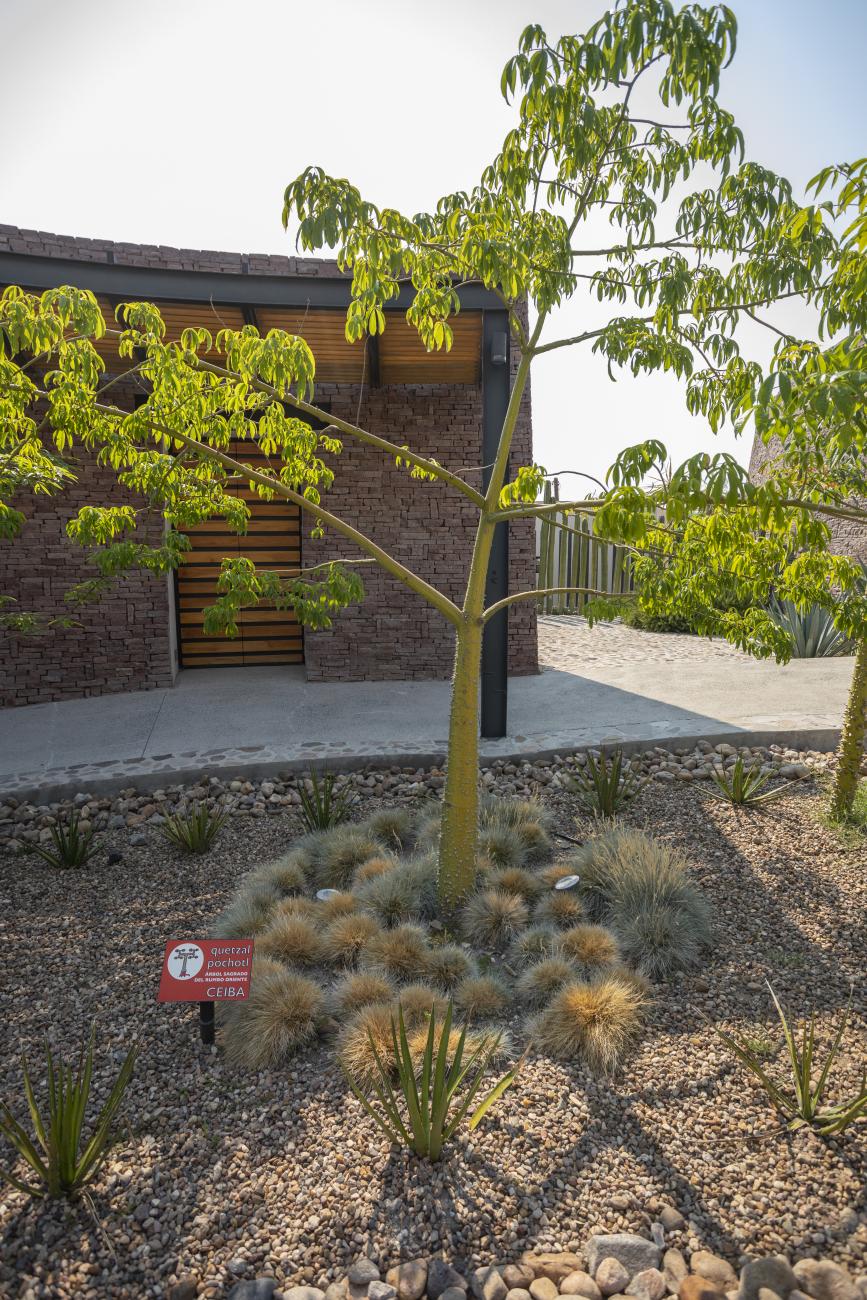

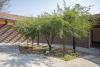
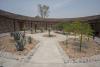
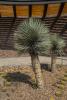
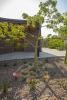
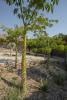
The museum’s central garden was designed to reflect the Toltec vision of the earthly plane. According to the Historia Tolteca-Chichimeca codex, the terrestrial world was divided into four cardinal directions, each upheld by a sacred cosmic tree.
- The east, associated with the color red, was supported by the ceiba tree.
- The south by the maguey manso (gentle agave).
- The west by the Izote palm.
- And the north by the mezquite tree.
These trees, which still grow naturally in the region today, once symbolized the sacred anchors of the earthly realm in Toltec cosmology. Together, they evoke a worldview in which the natural landscape was deeply intertwined with spiritual and cosmic order.
Document
Document
- DirecciónClaudia Pilar Dovalí Torrescdovali.qro@inah.gob.mx+52 (442) 225 30 87Comunicación EducativaMartha Sánchez Martínezmartha_sanchez@inah.gob.mx+52 (442) 225 11 32